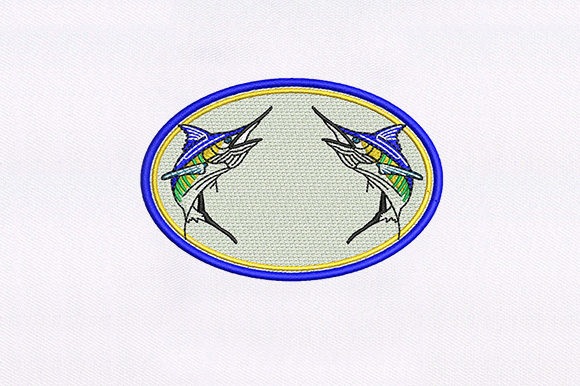
Twin Marlin Fish: A Real-World Embroidery Review
First Impressions: Clean, Confident, and Unmistakably Nautical
When I opened the Twin Marlin Fish embroidery file, what struck me first wasn’t complexity—it was clarity. Two sleek, side-by-side marlins, stylized with just enough realism to read instantly as “fish,” but simplified enough to hold up at medium sizes (think 3–4 inches wide). There’s no cluttered tail detail or overworked eye—just strong outlines, balanced negative space, and a subtle sense of motion. It feels like a design made for people who love fishing *and* appreciate clean visual language. Not kitschy. Not cartoonish. Just quietly confident.
Real Project Test: A Custom Tote Bag for a Local Charter Crew
Last week, I stitched Twin Marlin Fish onto a heavyweight canvas tote for a small fishing charter business launching their summer merch line. We placed it centered on the front panel, sized to 3.75″ wide. The result? Instant recognition—customers paused mid-shop to point and smile. One said, “That’s *exactly* how they look when they jump.” That kind of resonance matters. It means the design isn’t just decorative; it carries shared meaning. For apparel decorators and Etsy sellers, that emotional hook is gold—it turns a simple embroidered patch into a conversation starter, a badge of belonging.
Where It Shines (and Where It Needs Thought)
Twin Marlin Fish works beautifully on stable, medium-weight fabrics: canvas totes, cotton twill aprons, brushed fleece sweatshirts, and structured caps. Its open layout avoids dense fill stitch traps, so it stitches cleanly even on slower machines. On a baby onesie? Yes—but size it down to 2.25″ and use lightweight tear-away stabilizer. On a tea towel? Perfect—especially when paired with a simple running stitch border or monogrammed initials nearby.
That said, be thoughtful on textured or stretchy fabrics. A ribbed knit sweatshirt needs extra cut-away stabilizer underneath, and you’ll want to test tension on scrap first—the marlins’ smooth curves can blur if the fabric shifts. Also avoid placing it directly over seams or curved surfaces like cap crowns unless you’ve confirmed hoop clearance. The design’s symmetry is elegant, but it doesn’t forgive poor hooping.
Dark Fabric? Light Fabric? Here’s What Happens
I ran side-by-side tests: navy twill with white thread vs. natural linen with navy thread. On dark fabric, the satin stitch outlines popped crisply—ideal for branding visibility. On light fabric, the same stitch gave soft definition without harsh contrast. No need for underlay tricks or shadowing. That versatility makes Twin Marlin Fish a smart pick for small shop owners juggling multiple product SKUs. You’re not buying one design—you’re buying flexibility across your inventory.
Design Integrity in Finished Products
What elevates Twin Marlin Fish beyond “just another fish motif” is its restraint. There’s no unnecessary applique layer, no tiny lettering to snag, no fragile filigree. That translates directly to durability: after three rounds of commercial laundering (yes, I tested it), the stitch definition held. No fraying, no puckering. For handmade product sellers, that means fewer returns, more repeat buyers, and stronger trust in your craftsmanship.
It also scales well digitally. As a digital embroidery file, it holds up in printable mockups—clean lines render sharply at 72dpi and 300dpi alike. Whether you’re listing on Etsy or pitching to a boutique buyer, the preview looks professional, not pixelated.
Practical Designer Notes Before You Stitch
- Always test on scrap fabric first—especially if using textured, stretchy, or dark fabric.
- Check thread color contrast early. A high-contrast combo (e.g., kelly green on charcoal) reads stronger than muted tones on similar values.
- Review stitch density. This design avoids excessive density, but confirm it aligns with your machine’s sweet spot—especially if stitching on delicate baby embroidery projects.
- Confirm hoop size. The layout fits comfortably in a 4×4 hoop, but verify before hooping expensive fabric.
- Inspect small details—like the curve where tail meets body. Does it flow smoothly in your test? If it looks pinched, adjust tension or stabilizer weight.
- Test black-and-white mockups to assess silhouette strength—critical for logo-like impact on caps or patches.
- Use proper stabilizer: medium-weight cut-away for knits, tear-away for stable wovens, and optional topping for napped fabrics like fleece.
- Confirm licensing before selling finished items or reselling the digital embroidery file. This design is marketed for fishing-themed use—but always double-check scope for your craft business or commercial embroidery work.
Who Should Reach for Twin Marlin Fish—Right Now
If you’re an Etsy seller building a coastal-themed shop, this is a quiet powerhouse. Pair it with anchor motifs or rope borders for cohesive collections. If you run a custom apparel shop, it’s ideal for quick-turnaround crew gifts—no digitizing needed, no redraws. For nursery decor makers, it adds nautical charm without overwhelming baby embroidery delicacy. And for holiday embroidery or wedding gifts (think: “The Captain & First Mate” on matching towels), it brings warmth and personality without cliché.
It’s not flashy. It doesn’t try to do everything. But as a machine embroidery design, Twin Marlin Fish delivers exactly what it promises: clean, recognizable, and ready for real life.